
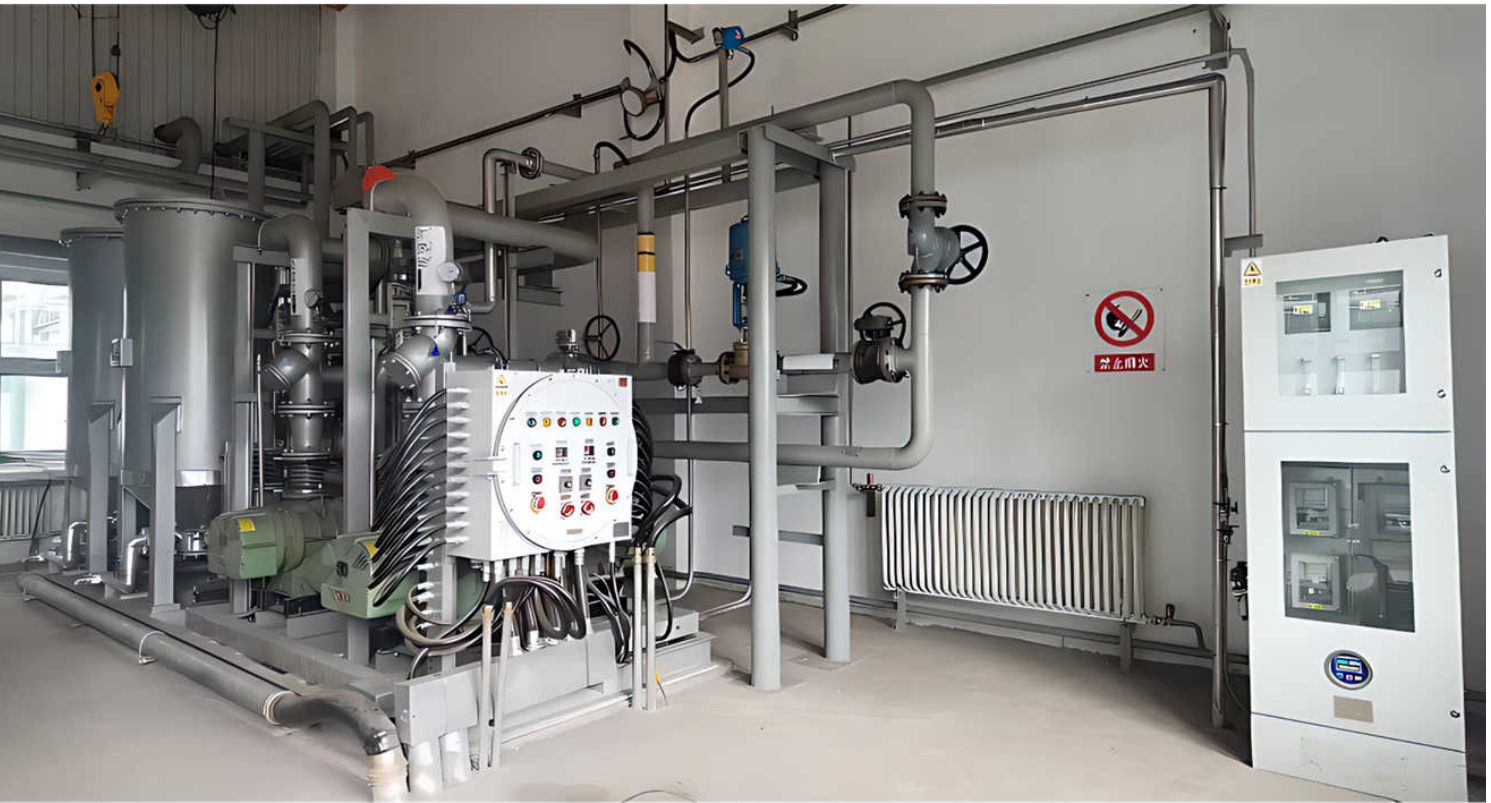
Waste Hydrogen Recovery Technology

Hydrogen is used as a protective gas in the metallurgical industry, primarily for the quenching protection of silicon steel sheets, cold-rolled steel plates, and other special steels. Additionally, it serves as a reducing gas to reduce metal oxides for the production of pure metals, such as tungsten, titanium, cobalt, rhenium, tantalum, molybdenum, copper, nickel, chromium, germanium, and silicon. Waste hydrogen recovery involves treating the waste hydrogen emitted during industrial production—including dust removal, oil removal, oxygen removal, and dehydration—then using a pressure swing adsorption (PSA) process with a booster fan to restore the hydrogen quality to meet production requirements for recycling. This delivers significant economic benefits and can also serve as a hydrogen source for crude benzene hydrogenation. Traditionally, hydrogen for steel mill protection was mainly produced via water electrolysis, which has high energy consumption. Meanwhile, steel mills have abundant hydrogen-containing gas sources, such as coke oven gas from coking processes. Replacing water electrolysis with PSA-based hydrogen production from coke oven gas yields excellent economic returns.

Advanced and reliable process, multi tower operation;

The hydrogen recovery rate is high, ranging from 60-96% depending on the gas source and product conditions;

Wide applicable pressure range: 2Kpa-3.0Mpa;

The purity of the product can be adjusted within 90-99.999%;

High operational flexibility, up to 20-120%;

The continuous operation time of the device is 2 years;

Low energy consumption, easy device operation, convenient start and stop, with a start and stop time of less than 1 hour;

The device has a high degree of automation, with fault self diagnosis capability, and can achieve undisturbed tower cutting and online fault handling.