
Behind steel smelting and chemical production, there is a gas that is often overlooked but extremely valuable - coke oven gas. Simply put, it is a byproduct of the coking industry. When several types of
bituminous coal are formulated into coking coal and subjected to high-temperature dry distillation in a coking furnace, in addition to producing coke and tar, this combustible gas is also produced. Although
it is a byproduct, it plays an indispensable role in modern industry due to its high combustible content and high calorific value.
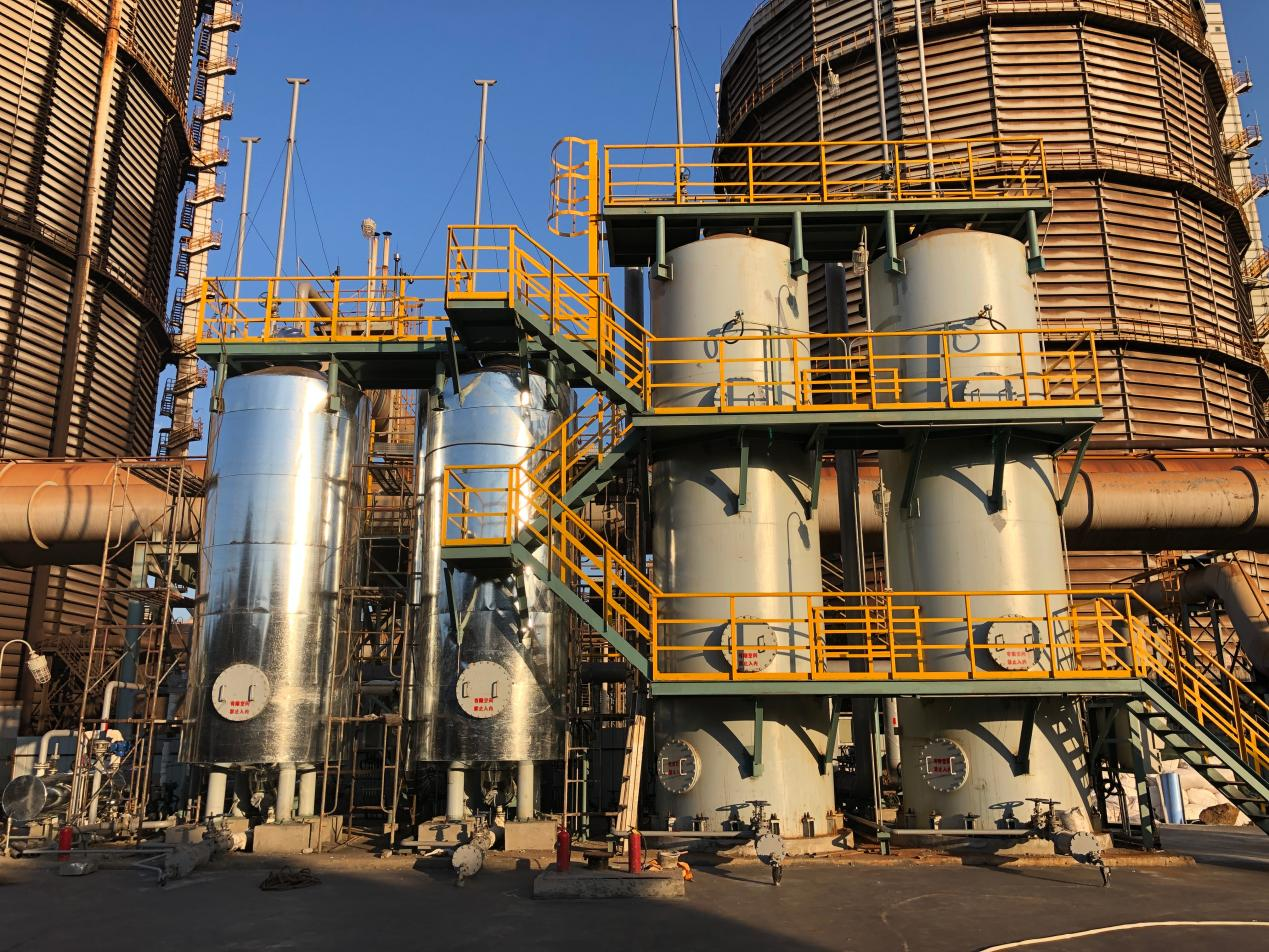
To truly understand coke oven gas, it is necessary to delve into its "main components". Coke oven gas is a complex mixture, and its specific yield and composition may vary depending on the quality of
coking coal and the conditions of the coking process. But overall, it is mainly composed of two main forces: hydrogen and methane. Among them, hydrogen has the highest content, usually accounting for 55% to
60% of the proportion; Methane follows closely behind, accounting for approximately 23% to 27%. These two gases form the basis for the high calorific value of coke oven gas.
In addition to hydrogen and methane, coke oven gas also contains small amounts of other gas components. For example, the content of carbon monoxide is usually between 5% and 8%, unsaturated hydrocarbons
above C2 account for 2% to 4%, and there are also small amounts of carbon dioxide, nitrogen, and oxygen. Among these components, hydrogen, methane, carbon monoxide, and unsaturated hydrocarbons are all
combustible components, and their combined proportion is extremely high, making coke oven gas a truly high-value gas with a combustible component of about 90%.
It is precisely because of this unique composition that coke oven gas exhibits distinct physical and chemical properties. Firstly, due to its extremely high hydrogen content, it burns very quickly, with
a short flame and an ignition temperature between 600 ℃ and 650 ℃. Secondly, it is a colorless gas with a distinctive odor. It should be noted that coke oven gas has certain toxicity due to the presence of
small amounts of carbon monoxide and hydrogen sulfide in its composition; Meanwhile, as a combustible gas, it also has explosive properties, with an explosion limit between 6% and 30%.
In recent years, the comprehensive utilization technology of coke oven gas has evolved from simple fuel utilization to chemical raw material conversion, forming a diversified product system. Its conversion
pathway has covered multiple fields such as methanol, liquefied natural gas (LNG), high-purity hydrogen, synthetic ammonia, and synthetic natural gas (SNG). Each route relies on the composition characteristics
of coke oven gas, which is rich in hydrogen and methane, and achieves directional conversion through key technologies such as catalytic conversion, methanization, pressure swing adsorption, and cryogenic
separation. The products are widely used in downstream markets such as energy, chemical, transportation, and electronics industries, and have initially built a complete industrial chain for high-value utilization
of coke oven gas. Scientific understanding and effective utilization of coke oven gas is of great significance for the comprehensive utilization of resources and energy conservation and emission reduction.

Follow us
Copyright 2026 Shanghai Tongzhu Chemical Science &Tech Co., Ltd. ICP:沪ICP备11047906号-1



 关闭返回
关闭返回